VMBO Explained: What Dutch Secondary School Actually Looks Like
If your child has just received a VMBO recommendation, or you’re trying to understand what those four letters mean, this guide is for you. For the bigger picture of how the whole Dutch system fits together, The Dutch Education System Explained is a good place to start.
From Primary School to VMBO
The road to VMBO starts well before secondary school. As explained in Understanding Cito Scores & LVS, a child’s progress through primary school builds toward the schooladvies in group 8. The secondary school track a student follows is determined by a combination of the teacher’s recommendation, based on LVS tests, and the doorstroomtoets. VMBO is the most practical of the three main tracks: more hands-on and vocationally oriented than HAVO and VWO. ‘You can read more about the comparison between VWO, HAVO en VMBO in this article.
What does VMBO Involve?
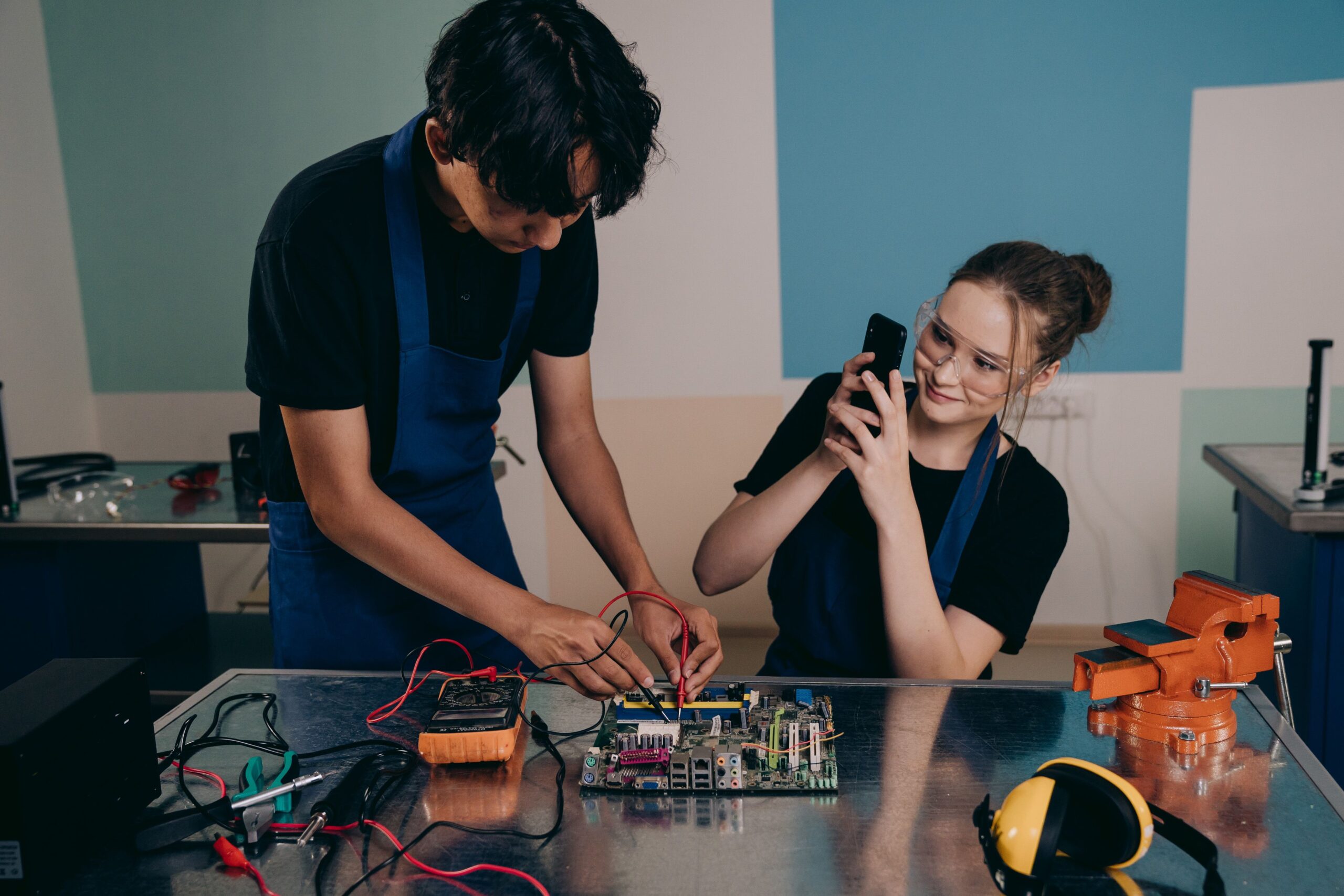
VMBO stands for Voorbereidend Middelbaar Beroepsonderwijs (Preparatory Secondary Vocational Education). It is a four-year track (for students aged roughly 12 to 16) that prepares students for MBO (Middelbaar Beroepsonderwijs), the Dutch vocational college system. About half of all Dutch secondary students follow a VMBO route. Rather than focusing purely on abstract theory, VMBO combines general subjects (like Dutch, English, and math) with practical, real-world skills geared toward specific trades and professions: ranging from healthcare and technology to hospitality, business and construction.
The Four VMBO Learning Paths
Unlike HAVO or VWO, VMBO is split into four distinct learning paths, varying from highly practical to more theoretical:
- VMBO-BB (Basisberoepsgerichte leerweg): Focuses heavily on practical learning and work experience. Ideal for students who learn best by doing.
- VMBO-KB (Kaderberoepsgerichte leerweg): A balance between theoretical knowledge and practical assignments, preparing students for management-support or technical roles.
- VMBO-GL (Gemengde leerweg): Mostly theoretical subjects combined with one vocational subject.
- VMBO-TL (Theoretische leerweg): This used to be fully theoretical with no practical sector subjects. Nowadays, there are schools that also offer practice-oriented subjects for VMBO-TL, to ensure that students, despite their theoretical learning path, still have a good understanding of practical applications. Sometimes VMBO-TL is called MAVO.
Onderbouw and Bovenbouw: How the Years Are Structured
The first two years of VMBO, the onderbouw, often start in a mixed brugklas. This gives students time to adjust before their final level is set.
Around year three, students enter the bovenbouw. Here, students in the practical tracks (BB and KB) choose a sector profile: such as Zorg & Welzijn (Healthcare & Welfare), Bouwen, Wonen & Interieur (Construction & Interior), or Horeca, Bakkerij & Recreatie (Hospitality & Bakery). Students in VMBO-TL focus on a broader subject package (profiel) like Economics, Agriculture, or Technology.
Are Extra Options Possible at VMBO?
- LWOO (Leerwegondersteunend onderwijs): Extra educational support for students who need additional help with learning or behavioral challenges while following a regular VMBO track.
- Practical & Tech Programs: Many schools offer specialized streams such as Vakcollege (focused early on technology or care) or bilingual education (TTO) within VMBO-TL.
How Exams Work
VMBO grades are built through two components:
- Schoolexamen (SE): Practical tests, coursework, and written exams set by the school throughout years 3 and 4.
- Centraal Eindexamen (CE): A national exam taken at the end of year 4.
For students in practical tracks (BB/KB), the final exam includes a comprehensive practical exam (beroepsgericht praktijkexamen) alongside written tests. The final mark for each subject is an average of the SE and CE.
What Comes After VMBO
Graduating from VMBO opens up several clear pathways:
- To MBO: The direct, natural progression for almost all VMBO students. The level of MBO accessible depends on the VMBO track (e.g., VMBO-BB leads to MBO Level 2; VMBO-KB, GL, and TL lead to MBO Levels 3 and 4).
- To HAVO: Students who complete VMBO-TL (MAVO) with the right subject package and grades can transition directly into year 4 of HAVO (4-havo). This process is popular among students aiming for HBO applied universities later on. In ‘The Dutch Education System Explained’ several routes to university are explained.
- Into the Workforce: After completing MBO following VMBO, students enter the job market with recognized, practical qualifications.
In International Terms
A VMBO diploma ranges from pre-vocational secondary education (BB/KB) to general lower secondary education (TL/MAVO). On the European Qualifications Framework (EQF), VMBO sits at Level 1 (BB) and Level 2 (KB/GL/TL).
In international systems:
- UK: Equivalent to GCSEs (specifically grades 3–1 / D–G for BB, and grades 9–4 / A*–C for KB/TL).
- US: Broadly equivalent to completing Grade 10 or a Vocational/Technical High School Track (rather than a full High School Diploma, which is closer to HAVO/VWO).
Need personal guidance? We're here to help:
📅 Book a discovery call with us to talk through your family’s unique situation.
🇳🇱 Start Dutch lessons today to give your child a head start before the school year begins.
🎒 Need help with your school search? Let us guide you through finding the perfect fit for your child.
Key Takeaways: The VMBO Track
- Practical & Vocation-Oriented: Combines general education with hands-on learning across four distinct pathways (BB, KB, GL, TL).
- Pathway to MBO: Directly prepares 12- to 16-year-old students for vocational college qualifications and future careers.
- Flexible Step Up: VMBO-TL (MAVO) offers direct routes to HAVO or MBO Level 4, opening doors to higher education.
Frequently Asked Questions about VMBO in the Netherlands
What does VMBO stand for?
VMBO stands for Voorbereidend Middelbaar Beroepsonderwijs. It is a 4-year secondary education track focusing on vocational and general education.
Is MAVO the same as VMBO?
Yes. MAVO is the traditional term for VMBO-TL (Theoretische Leerweg), the most theoretical track within VMBO.
Can my child go to university after VMBO?
Not directly. However, a student can progress from VMBO-TL to HAVO (and then to HBO/WO), or complete an MBO Level 4 diploma to gain access to a university of applied sciences (HBO). After completing the first year of HBO, students can transfer to University.